
Bookkeeping For Construction Companies Baltimore Md
Table of Contents
Specialized Bookkeeping for Baltimore Construction Companies
Baltimore’s construction industry is thriving, with projects reshaping the skyline from Dundalk to Owings Mills. For companies navigating this growth, specialized Bookkeeping For Construction Companies Baltimore Md and bookkeeping baltimore md become essential to manage the unique demands of local builds. As a hub for infrastructure and residential development, the area sees booming activity, but financial complexities can hinder progress without expert support.
Construction firms often face irregular cash flows tied to project milestones, making predictable budgeting challenging. Job costing–tracking materials, labor, and overhead per project–is vital yet intricate, especially with retainage withholding payments until completion. Maryland-specific tax rules for contractors add layers of compliance, while common errors like inaccurate tracking plague the sector. According to Baltimore Construction Accounting Services, over 40% of MD contractors report financial inaccuracies due to poor bookkeeping, leading to costly audits or cash shortages. Construction bookkeeping services maryland address these pain points, ensuring precise Baltimore contractor accounting and MD construction financial tracking.
Hill Bookkeeping offers tailored outsourced bookkeeping baltimore md as certified QuickBooks ProAdvisors with a boutique focus on contractors. Serving nearby businesses with quickbooks for construction contractors, we streamline operations and avoid regional pitfalls for sustainable growth. Understanding these specialized needs is the first step toward robust financial health.
Key Differences in Construction Bookkeeping
In Baltimore’s dynamic construction industry, understanding the key differences between construction bookkeeping and traditional methods is essential for contractors managing complex projects. Unlike standard businesses with steady operations, construction firms deal with fluctuating timelines, variable costs, and regulatory demands that require specialized Bookkeeping For Construction Companies Baltimore Md. These distinctions help prevent financial pitfalls and ensure compliance, particularly in a competitive market where errors can lead to significant losses. By grasping these fundamentals, Baltimore builders can optimize their financial tracking and make informed decisions for sustainable growth.
Construction vs Traditional Bookkeeping Basics
Construction bookkeeping diverges from traditional methods primarily due to its project-based nature, treating each job like a mini-business with unique revenue and expense cycles. Traditional bookkeeping focuses on ongoing operations through general ledgers, while construction demands adaptations like accrual basis for long-term projects to match revenues with expenses accurately. For small contractors in Maryland, this shift prevents underreporting and supports better cash flow management.
Why do these differences matter? In Baltimore’s fast-paced sector, misaligned tracking can distort profitability, especially for harbor-area renovations where costs vary seasonally. Drawing from construction accounting overviews, specialized practices like job costing ensure precise allocation, unlike the lump-sum approach in traditional setups.
Here’s a comparison highlighting core aspects:
| Aspect | Traditional Bookkeeping | Construction Bookkeeping |
|---|---|---|
| Cost Tracking | General overhead and routine expenses | Direct and indirect costs per project |
| Revenue Recognition | Immediate upon sale or service | Progress billing and percentage completion |
| Compliance Focus | Standard IRS rules | Industry-specific regulations like retainage |
This table, informed by expert breakdowns, underscores why construction requires tailored systems. For deeper insights, explore small business bookkeeping articles that guide small contractors on these transitions. Overall, embracing project-based accounting for contractors enhances accuracy and scalability in Baltimore’s market.
Job Costing and Retainage in MD Projects
Job costing stands as a cornerstone of construction bookkeeping, involving meticulous tracking of direct costs like materials and labor, alongside indirect expenses such as equipment rentals for each project phase. In Maryland, this method is crucial for multi-entity setups involving subcontractors, allowing firms to allocate costs precisely and assess true profitability. Retainage, typically 5-10% withheld by owners until project completion, adds complexity, requiring dedicated reserves to manage cash flow disruptions common in MD builds.
For a Baltimore harbor renovation example, job costing captures variable elements like weather delays impacting labor, while retainage holds payments until inspections pass, often spanning months. Progress billing, tied to milestones, contrasts with traditional invoicing, ensuring revenues align with work completed under accrual adaptations. References on construction accounting highlight how improper job costing leads to 20-30% overestimation errors, emphasizing the need for construction bookkeeping services maryland experts like those at Hill Bookkeeping to navigate these intricacies. This MD-specific financial tracking for builders safeguards against disputes and supports strategic bidding in competitive tenders.
Local Tax and Compliance Challenges
Maryland’s construction firms face unique tax hurdles, including sales tax on materials purchased for projects, which traditional bookkeeping often overlooks in its simpler expense categorization. Compliance demands tracking use taxes for out-of-state supplies and adhering to local withholding rules for subcontractors, amplifying the need for vigilant multi-entity oversight. In Baltimore, failure to comply can result in audits, with case studies showing error rates up to 15% among non-specialized firms.
These challenges intensify for general contractors handling retainage releases tied to lien waivers under state law. For instance, a Dundalk-based builder might navigate exemptions for certain renovations while documenting everything for IRS percentage-of-completion reporting. Bookkeeping services dundalk md provide essential support in these areas, ensuring accurate filings and avoiding penalties. Specialized knowledge here not only meets MD regulations but also streamlines operations, reducing administrative burdens. Understanding these local nuances equips Baltimore contractors with the tools for compliant, efficient financial management, paving the way for enhanced project outcomes and business growth.
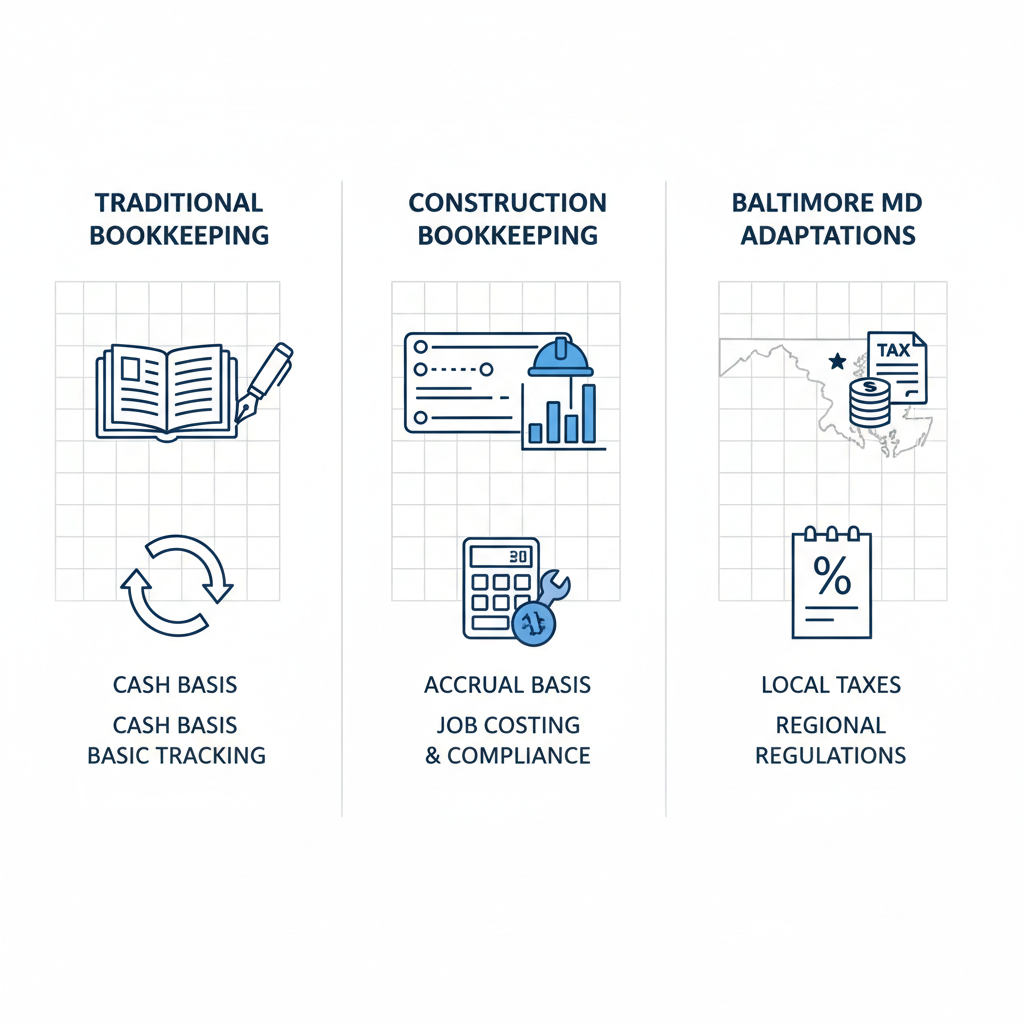
Key differences in construction vs traditional bookkeeping
Advantages of Expert Construction Bookkeeping Services
Imagine a Baltimore construction firm struggling with erratic cash flow until partnering with Hill Bookkeeping. Within months, precise tracking via QuickBooks revealed hidden inefficiencies, boosting profitability by 25% on ongoing projects. This real-world transformation highlights how expert services turn financial chaos into opportunity for local contractors.
Improved Cash Flow and Project Profitability
Accurate job costing is essential for construction companies in Baltimore, where project timelines and material costs fluctuate wildly. Specialized bookkeeping stabilizes cash flow by tracking expenses in real-time, preventing overruns that plague many firms. For instance, cash flow management baltimore md ensures funds align with project milestones, enhancing financial forecasting.
- Precise tracking of labor and materials reduces errors, saving up to 15% on costs, as seen in industry examples from Baltimore Construction Accounting.
- Historical data improves bidding accuracy, leading to higher win rates on local jobs.
- Consistent reporting flags delays early, maintaining steady inflows for payroll and suppliers.
These tools, like quickbooks for construction contractors, address signs of troubled books such as inconsistent cash flow, proving the ROI of outsourced services outweighs fees through sustained project profitability.
Compliance and Risk Reduction in MD
Maryland’s construction regulations, including specific taxes on materials and lien filing deadlines, demand meticulous recordkeeping to avoid hefty penalties. Expert bookkeeping services navigate these local rules, minimizing risks for Baltimore contractors. According to Friedman CPA insights, firms without specialized help face up to 30% higher compliance costs from errors.
The following table illustrates key risk areas:
| Risk Area | Without Specialized Bookkeeping | With Expert Services |
|---|---|---|
| Tax Compliance | Frequent errors lead to fines up to $10,000 | Accurate filings ensure zero penalties, saving thousands |
| Lien Management | Missed deadlines result in payment disputes | Timely submissions protect cash flow and relationships |
| Audit Readiness | Disorganized records prolong audits by months | Clean books streamline reviews, reducing stress and fees |
With these practices, contractors achieve audit readiness and avoid disputes. Friedman CPA reports that specialized bookkeeping cuts overall risk by 40%, allowing focus on core operations rather than regulatory headaches. This is vital for Bookkeeping For Construction Companies Baltimore Md, where local laws evolve quickly.
Strategic Insights for Business Growth
Clean books provide the foundation for informed decisions, helping Baltimore contractors scale amid regional demand. By analyzing financial data, owners identify trends like profitable project types, optimizing bids for new opportunities. Hill Bookkeeping’s expertise turns numbers into actionable strategies, fostering long-term growth.
- Historical insights enhance bidding, increasing margins by 20% on average, per Baltimore Construction Accounting data.
- Scalable systems support expansion, from solo operations to multi-crew teams.
- Time savings let owners prioritize networking and client acquisition over paperwork.
For bookkeeping for business growth owings mills md, this means contractor financial optimization in MD, answering why clean books matter: they drive profitability and reveal if books need help through issues like audit flags. Ultimately, these benefits, achieved via Hill Bookkeeping’s structured processes, position firms for thriving in Baltimore’s competitive market.
Implementing Construction Bookkeeping Solutions
Implementing robust bookkeeping solutions is essential for Baltimore construction companies to manage finances efficiently and comply with Maryland regulations. Tailored setups using QuickBooks streamline job costing, invoicing, and reporting, allowing firms to track costs accurately from project inception to completion. For local contractors seeking Bookkeeping For Construction Companies Baltimore Md, outsourcing to experts like Hill Bookkeeping provides a seamless, remote model via their client portal, reducing overhead while ensuring precision. This approach addresses common challenges such as irregular cash flows and compliance needs, empowering builders to focus on core operations.
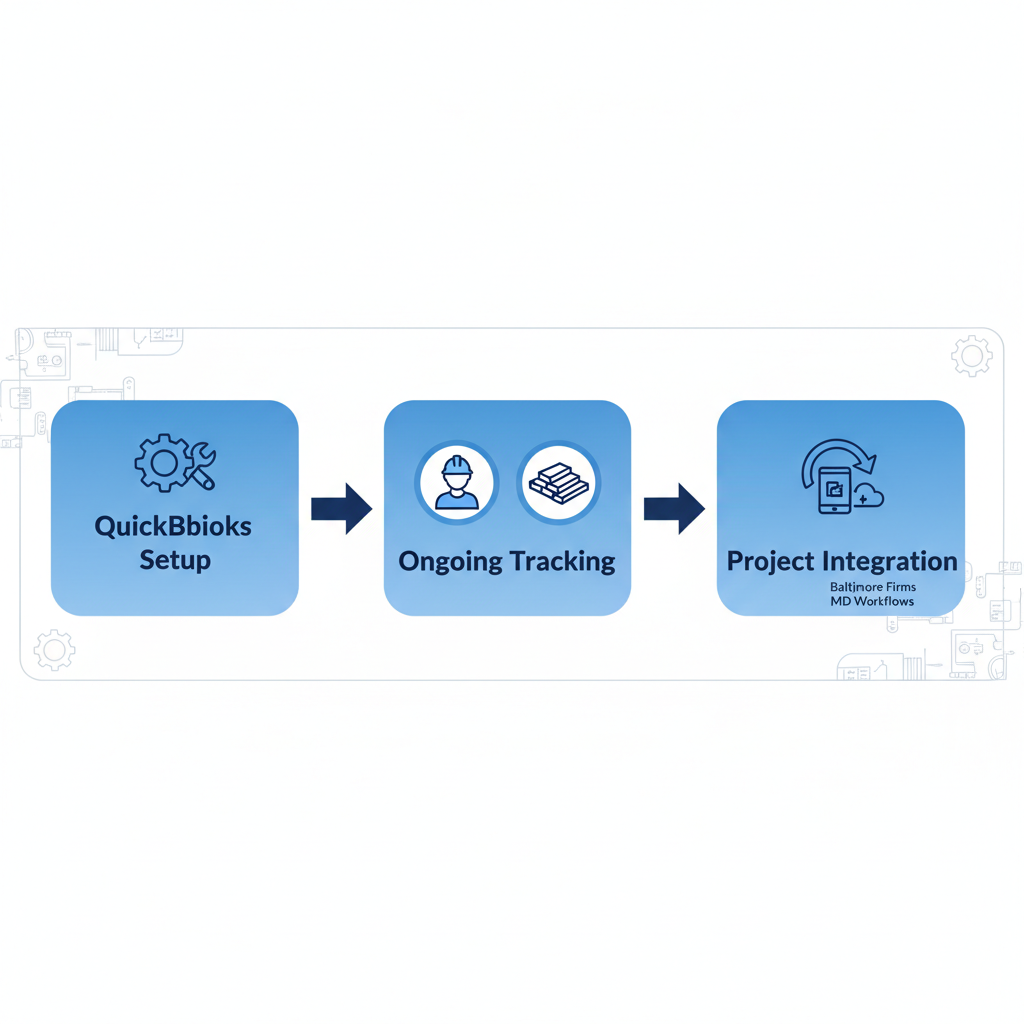
Process flow for QuickBooks-based construction bookkeeping implementation
Customizing these systems for Baltimore’s dynamic construction landscape involves region-specific tweaks, like handling retainage laws and local tax filings, which construction bookkeeping services maryland specialists handle expertly.
Setting Up QuickBooks for Job Costing
Begin with initial configuration to align QuickBooks with construction workflows, a process that quickbooks bookkeeper baltimore md professionals often guide for optimal results. Drawing from best practices like those from Friedman CPA, start by enabling job costing features in the Company Preferences menu.
- Create classes for overhead, labor, and materials to categorize expenses accurately.
- Set up jobs for each project, linking them to customers and enabling progress invoicing for milestone payments.
- Customize item lists for common construction costs, such as subcontractors and permits, to facilitate MD contractor bookkeeping setup.
- Import historical data if migrating from legacy systems; Hill Bookkeeping supports this to avoid data loss hurdles.
This setup, featuring workflow diagrams similar to Friedman CPA’s guides, ensures job profitability tracking from day one, vital for quickbooks for construction contractors in competitive Baltimore markets. (148 words)
Ongoing Tracking and Reconciliation
Monthly processes keep books current amid fluctuating deposits and payments, crucial for construction bookkeeping services maryland. Focus on materials, labor, and subcontractor tracking to maintain accuracy.
- Record expenses daily using job codes, capturing invoices for supplies and payroll for crews.
- Issue progress invoices, deducting retainage as per MD contracts, and track change orders to adjust budgets dynamically.
- Perform bank reconciliations weekly, addressing irregular subcontractor draws; Thomas J. Palm highlights pitfalls like unmatched deposits, which automated alerts in QuickBooks prevent.
- Generate 1099 reports for subs by year-end to ensure MD compliance, flagging any missing vendor info.
Hill Bookkeeping mitigates these through remote portal access, reconciling accounts remotely and providing clean books for tax season. This ongoing vigilance prevents cost overruns, as seen in common reconciliation errors outlined by industry experts. (152 words)
Integrating with Local Project Management
Seamless integration enhances operations by syncing bookkeeping with regional tools, supporting QuickBooks integration for builders in Maryland.
- Connect QuickBooks to apps like Procore or Buildertrend via APIs for real-time data flow on job progress.
- Automate expense imports from project management software, reducing manual entry for Baltimore firms.
- Use custom fields to align timelines with financials, tracking delays that impact cash flow.
- Leverage accounting and bookkeeping services cockeysville md for extended local support, including custom integrations.
This synchronization, informed by Friedman CPA workflows, eliminates silos and boosts efficiency. For hurdles like software compatibility, Hill Bookkeeping offers troubleshooting, ensuring smooth Bookkeeping For Construction Companies Baltimore Md operations. Proper implementation like this sets the stage for best practices in ongoing financial management. (150 words)
Best Practices for Managing Construction Finances
Effective financial management is crucial for construction companies in Baltimore, where project timelines are tight and costs can fluctuate due to local regulations and material prices. Implementing robust bookkeeping practices ensures accurate tracking of expenses, compliance with Maryland tax laws, and better cash flow for ongoing operations. By focusing on the right tools, consistent reviews, and expert partnerships, firms can avoid costly errors and scale successfully. These strategies, tailored for Bookkeeping For Construction Companies Baltimore Md, emphasize proactive oversight to support growth in a competitive market.
Selecting the Right Software and Versions
Choosing the appropriate accounting software is foundational for quickbooks for construction contractors. QuickBooks stands out for its adaptability to job costing, invoicing, and reporting needs specific to Baltimore’s construction scene. For most MD builders, QuickBooks Online Plus offers advanced features like progress invoicing and class tracking, ideal for multi-phase projects.
When selecting versions, consider your firm’s size and complexity. Small teams may start with Essentials for basic functionality, while larger operations benefit from Contractor Edition’s built-in retainage tools. A certified quickbooks bookkeeper baltimore md can customize setups to align with local compliance.
Here are key best practices:
- Evaluate job costing capabilities first, ensuring software handles change orders and variances.
- Opt for cloud-based versions for real-time mobile access on job sites.
- Integrate with construction-specific apps like Procore for seamless data flow.
The following table compares QuickBooks editions for Baltimore contractors, focusing on job costing features:
| Feature | QuickBooks Online Essentials | QuickBooks Online Plus | QuickBooks Contractor Edition |
|---|---|---|---|
| Job Costing | Basic tracking only | Advanced job costing with classes; Full job costing, progress invoicing | Industry-specific templates and reports; Tailored for construction with built-in retainage |
| Mobile Access | Limited | Full mobile app; Comprehensive mobile invoicing | Enhanced mobile for field use; Optimized for on-site data entry |
| Integrations | Basic (50+ apps) | Advanced (100+ apps); Robust for construction tools | Construction-specific integrations; Seamless with Procore, etc. |
As per Friedman CPA’s recommendations, QuickBooks Plus suits most MD contractors for its balance of features and affordability, while Contractor Edition excels for specialized needs. Avoid Essentials if detailed project tracking is essential to prevent underreporting costs.
Regular Audits and Job Cost Reviews
Routine audits maintain accuracy in Maryland construction projects, where unexpected expenses like permitting delays can impact budgets. Monthly reconciliations of bank statements and vendor invoices prevent discrepancies, while job cost reviews compare actuals against estimates to catch overruns early.
Incorporate these best practices into your workflow:
- Conduct weekly variance analyses for active jobs, flagging deviations over 5%.
- Document all change orders immediately to update budgets and avoid disputes.
- Perform quarterly audits using checklists that cover payroll, materials, and subcontractor payments.
Baltimore Construction Accounting guidelines stress documenting retainage properly to comply with MD lien laws. A common mistake is ignoring these reviews, leading to cash flow issues; instead, use them to refine future bids and enhance profitability.
Partnering with Local Specialists
Collaborating with experienced firms provides specialized support for complex construction bookkeeping services maryland. Local experts like Hill Bookkeeping, a certified QuickBooks ProAdvisor, offer insights into regional tax nuances and industry best practices.
Best practices for partnerships include:
- Seek specialists with construction experience for accurate job costing and compliance.
- Evaluate outsourced bookkeeping services for scalable support during peak seasons.
- Schedule regular consultations to align financial strategies with project goals.
For best financial strategies for MD builders and contractor compliance tips in Baltimore, outsourcing ensures adherence to state requirements without internal overload. Consider outsourced bookkeeping services to access scalable, specialized teams that handle compliance and cash flow management. Hill Bookkeeping’s boutique approach delivers personalized guidance, helping firms like yours achieve sustainable growth.
Applying these practices locally in Baltimore fosters resilience against economic shifts, ensuring Bookkeeping For Construction Companies Baltimore Md translates into tangible success through precise financial control and informed decision-making.
Achieving Financial Clarity for Your Construction Business
In the dynamic construction landscape of Baltimore, Maryland, specialized Bookkeeping For Contractors Baltimore Md stands as the cornerstone for sustainable success. This guide has explored the unique challenges of job costing, cash flow management, and compliance that Bookkeeping For Construction Companies Baltimore Md addresses through tailored practices. From differentiating percentage-of-completion methods to selecting QuickBooks for construction contractors, we’ve highlighted benefits like enhanced visibility into project profitability and streamlined tax reporting. Implementing these steps–starting with accurate recordkeeping and regular reconciliations–empowers contractors to avoid costly overruns and seize growth opportunities. According to Thomas J. Palm’s insights on construction accounting, firms with disciplined bookkeeping habits see up to 20% improved cash flow efficiency. Local success stories echoed in Baltimore Construction Accounting resources affirm that Maryland builders who prioritize these systems thrive amid regulatory demands.
Looking ahead, construction bookkeeping services maryland offer a pathway to scaling operations while maintaining financial health, extending even to diverse sectors like Bookkeeping For Event Planners Baltimore Md in the region. Hill Bookkeeping’s expertise ensures job-specific insights that drive informed decisions and foster long-term prosperity.
To put these strategies into action for your Baltimore business, partner with Hill Bookkeeping for seamless compliance and growth. Our personalized services deliver the clarity you need–contact us today to empower your construction journey financially.
